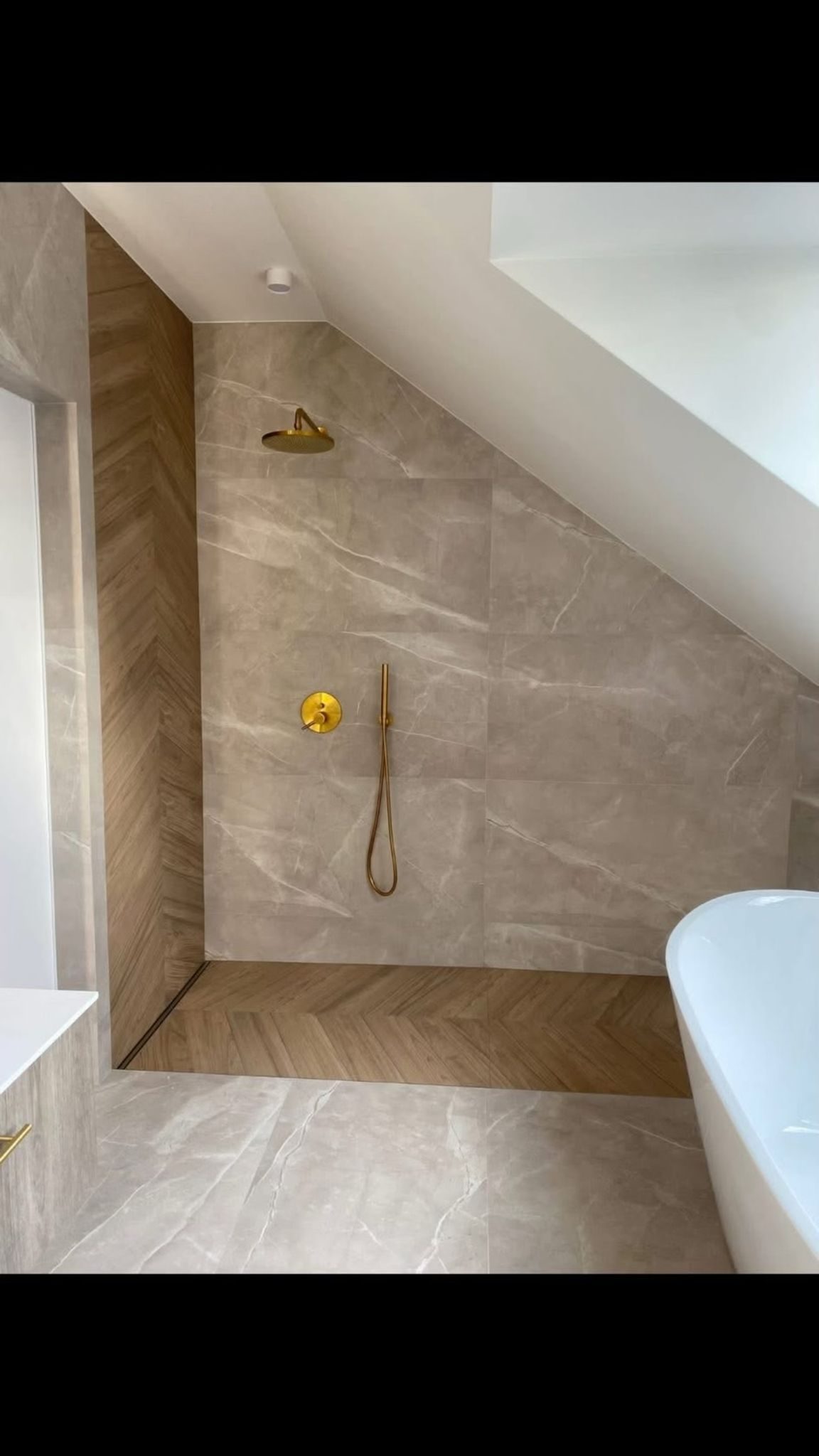
Small rooms are rarely improved by removing things. They are improved by making a few decisions properly, most of which cost less than a wall coming down.
Protect the longest sightline
Every room has one view that makes it feel its full size, usually from the door to the furthest corner. Find it and keep it clear. A tall bookcase sitting in that line makes a room feel a third smaller than a taller one placed against the wall beside you.
Bigger furniture, less of it
The instinct in a small room is small furniture, and it is wrong. Several small pieces read as clutter; one properly sized sofa reads as a room that was planned. The same applies to art: one large piece beats four small ones on the same wall.
Get things off the floor
Visible floor is what the eye reads as space. Wall-hung vanities, floating shelves and furniture on legs rather than plinths all show more floor and make the room breathe. It is the single most reliable trick there is.
Light in three places
One ceiling light flattens a room and makes the corners disappear. Three sources at different heights, a floor lamp, a table lamp and something on the wall, give the room depth. Warm bulbs at 2700K, all matching, because mixed colour temperatures are what make a room feel cheap.
Mirrors, but placed properly
A mirror opposite a window doubles the light. A mirror opposite a blank wall doubles the blank wall. Place it where it reflects something worth reflecting.
Curtains above the window
Hang the pole close to the cornice rather than to the window head, and let the curtains run wider than the reveal. The window reads as taller and the wall reads as fuller. It costs a little more fabric and it changes the room.
Keep the palette tight
Fewer colours, more texture. Walls, woodwork and joinery in one colour makes a small room read as one volume rather than a set of surfaces. Painting the woodwork white against a coloured wall draws a line around everything and makes the room feel boxed in.
Give the room one job
A small room that is trying to be a study, a spare bedroom and a drying room is doing none of them. Decide what it is for, design it for that, and it will feel twice the size it did.