Most renovation stress comes from not knowing what happens next. This is the shape of a typical project, what each stage takes and where things tend to go wrong.
The stages
Discovery, week one
A conversation about the house and how you use it. At the end of it you should have a rough scope and a realistic budget range. If those two do not meet, this is the moment to find out.
Survey and measure, week one or two
Somebody comes to the house and measures properly. This is also when the awkward things surface: the soil pipe that cannot move, the wall that turns out to be structural, the floor that is 40mm out of level across the room.
Design, weeks two to four
Layouts, then a full 3D model you can walk through, then materials. Changes here are free. Changes after this are not, which is why it is worth being difficult at this stage rather than polite.
Specification and ordering, weeks four to six
Everything gets listed and priced. This is where lead times start to matter: cabinetry is typically six to twelve weeks, stone is cut after a template is taken on site, and some brassware and tiles are considerably longer.
On site
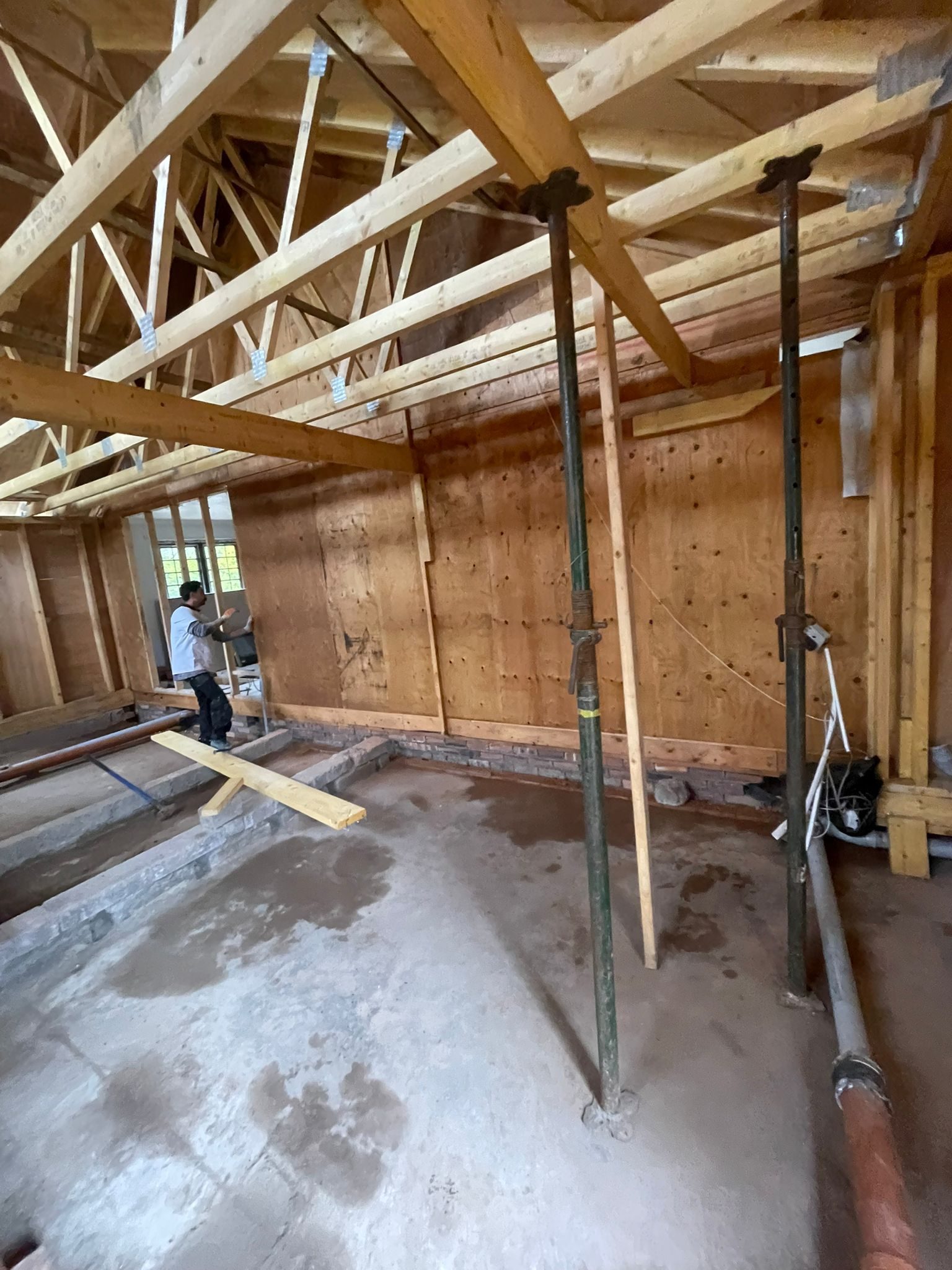
Strip out, then first fix, then plaster, then second fix, then decoration, then the finishing list. A single room is usually two to four weeks. A whole house is three to six months.
Where the money goes
As a rough split on a kitchen: cabinetry and worktops around half, appliances fifteen to twenty per cent, trades twenty to twenty-five per cent, and the rest lighting, flooring and decoration. On a whole-house project the trades share rises considerably and the finishes fall.
Keep ten to fifteen per cent as contingency. On an older property make it twenty. It is not pessimism, it is that nobody knows what is behind a wall until it is open.
Where projects go wrong
- Decisions made late. One undecided tile can stop a tiler, which stops a joiner, which pushes the whole programme by a fortnight
- No single point of contact. When four trades all have a different understanding of the plan, the client becomes the messenger
- Changing the scope halfway. Adding a room mid-project costs far more than it would have cost at the start
- Ordering nothing until work begins. Long-lead items have to be ordered during design, not during the build
- No contingency. The first surprise then becomes a crisis rather than an inconvenience
Living through it
For a kitchen, set up a temporary one somewhere: a kettle, a microwave and a fridge in another room makes six weeks bearable. For a whole house, decide early whether you are staying, because it changes the order the work is done in.
What good looks like
You know what is happening this week. You know what decision is needed by Friday and why. When something unexpected turns up, you hear about it the same day along with the options. That is what project management is, and it is most of what you are paying for.